Top 7 Challenges Dispatchers Face — and How AI Solves Them

Ask any logistics dispatcher about their daily routine, and you'll hear stories of constant pressure, split-second decisions, and the delicate balancing act of keeping everyone happy – drivers, customers, and management alike. The role of a dispatcher has become exponentially more complex in recent years, with rising customer expectations, driver shortages, and razor-thin profit margins leaving little room for error. Every day, dispatchers juggle dozens of moving parts: vehicles breaking down, drivers calling in sick, customers changing delivery windows, traffic accidents disrupting carefully planned routes, and urgent last-minute shipments that somehow need to be squeezed into already-full schedules. It's a high-stress job that demands quick thinking, deep logistics knowledge, and nerves of steel. But what if technology could shoulder much of this burden? What if artificial intelligence could handle the repetitive, time-consuming tasks while allowing dispatchers to focus on what humans do best – problem-solving, relationship building, and strategic decision-making? At Quadrix, we've worked closely with hundreds of dispatchers to understand their pain points and develop AI solutions that address real-world challenges. This article explores the seven most common problems dispatchers face daily and demonstrates how intelligent automation is transforming the profession from overwhelming to manageable.

Challenge #1: Manual Route Planning That Consumes Hours Each Day Picture this: It's 5:30 AM, and a dispatcher sits down with coffee and a stack of delivery orders. For the next two to three hours, they'll manually assign each shipment to a driver, trying to create efficient routes while considering delivery windows, driver hours of service, vehicle capacity, and customer priorities. By the time they finish, it's already mid-morning, and inevitably, something has changed – a new urgent order, a driver running late, a road closure. Manual route planning isn't just time-consuming; it's also suboptimal. Even the most experienced dispatcher can only consider a limited number of variables and combinations. The result? Routes that work but aren't truly optimized, leading to wasted fuel, excessive mileage, and drivers finishing their days exhausted from inefficient routing. **The AI Solution:** Quadrix's intelligent routing engine analyzes thousands of variables simultaneously – traffic patterns, delivery time windows, driver skills and preferences, vehicle specifications, road restrictions, fuel costs, and historical performance data. What takes a human hours to plan, AI accomplishes in seconds, and with demonstrably better results. Our clients report that AI-generated routes reduce total mileage by 15-25% compared to manual planning. More importantly, dispatchers reclaim those morning hours for higher-value activities: communicating with drivers, handling customer requests, and planning for future demand. One dispatcher told us, "I went from spending my entire morning buried in spreadsheets to actually managing my team. It's completely transformed how I work." The system also handles real-time replanning automatically. When a vehicle breaks down or a new urgent order arrives, the AI instantly recalculates optimal routes for all affected drivers, presenting the dispatcher with a ready-to-implement solution rather than forcing them to start from scratch.

Challenge #2: Real-Time Disruptions That Derail Carefully Made Plans No matter how perfectly a dispatcher plans the day, reality has other ideas. A major highway accident creates a two-hour delay. A key driver calls in sick. A truck breaks down mid-route. A customer suddenly needs their delivery three hours earlier than scheduled. Severe weather forces route changes. These disruptions happen constantly, and each one requires immediate replanning that cascades through the entire day's schedule. Traditional TMS platforms offer little help here. They're designed for planning, not dynamic replanning. When disruptions occur, dispatchers resort to phone calls, mental calculations, and best guesses about how to shuffle assignments and keep the day on track. The stress is enormous, mistakes are inevitable, and customers often bear the brunt through delayed deliveries. **The AI Solution:** Quadrix's AI platform continuously monitors real-time conditions and automatically adjusts plans as circumstances change. When our system detects a disruption – whether through traffic data feeds, vehicle telematics, or driver input – it immediately evaluates the impact and generates alternative solutions. The dispatcher receives clear options: "Driver A is stuck in traffic and will miss the next three deliveries. Recommend reassigning those stops to Driver B, who is 12 minutes away and has capacity. Estimated delay reduction: 47 minutes." The dispatcher can approve the change with a single click, or modify the AI's recommendation based on factors the system might not know. This real-time replanning capability reduces the average delay from disruptions by 60-70%. More importantly, it transforms dispatchers from reactive firefighters into proactive managers who can evaluate multiple scenarios before making informed decisions. The result? Fewer missed deliveries, happier customers, and significantly less stress for the entire team.

Challenge #3: Constant "Where's My Delivery?" Calls That Interrupt Workflow "Where's my delivery?" These four words might be the most dreaded in a dispatcher's vocabulary. Throughout the day, dispatchers field dozens of these calls from anxious customers. Each inquiry requires pulling up the shipment, contacting the driver, estimating arrival time, and calling the customer back. These interruptions fragment attention, delay other work, and create frustration on both sides. The problem extends beyond customer calls. Sales teams want updates for their clients. Management wants status reports. Drivers need clarification about their next stops. The dispatcher becomes an information hub, spending more time answering questions about shipments than actually managing logistics operations. **The AI Solution:** Quadrix's AI-powered customer portal eliminates most of these calls by providing real-time shipment visibility to all stakeholders. Customers receive automated notifications at key milestones – order confirmed, out for delivery, 30 minutes away, delivered – and can check current status anytime through a simple tracking link. For dispatchers, this means dramatically fewer interruptions. Our clients report a 70-80% reduction in "where's my delivery" calls after implementing intelligent tracking. The calls that do come through tend to be substantive issues that actually require dispatcher intervention, not simple status checks. The system also uses AI to predict potential delays before they become problems. If a driver is running behind schedule, the platform automatically sends proactive notifications to affected customers, explaining the delay and providing updated ETAs. This transparency converts potentially angry "where's my delivery?" calls into understanding customers who appreciate being kept informed. Additionally, the AI generates natural language updates that sound human and contextual: "Your delivery is on truck 247 with Maria. She's currently 4 stops away and should arrive at your location around 2:30 PM." No more generic tracking numbers and cryptic status codes – just clear, useful information.
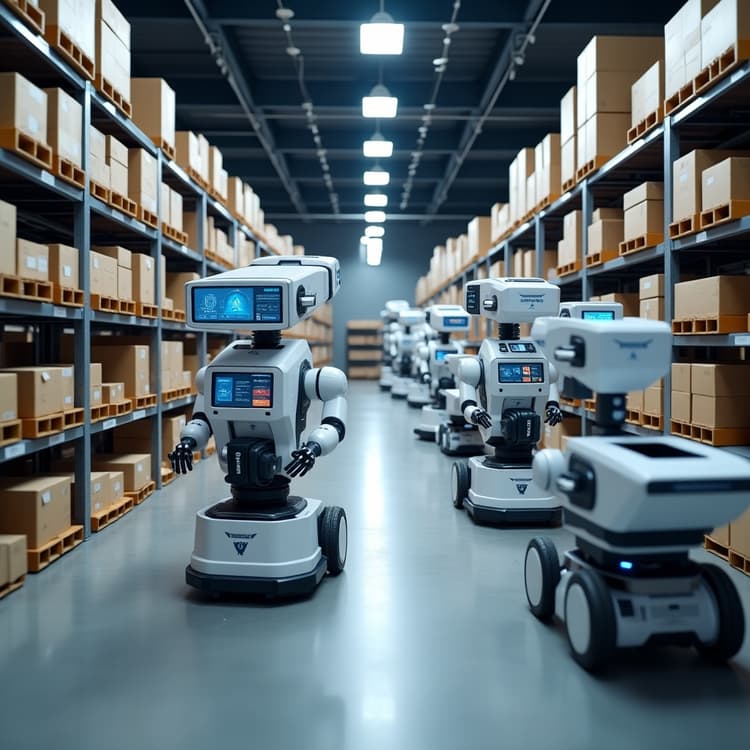
Challenge #4: Inefficient Load Planning That Leaves Money on the Table Every truck that leaves the warehouse partially loaded represents lost revenue. Yet manual load planning often results in suboptimal vehicle utilization. Dispatchers try to fit shipments together like a three-dimensional jigsaw puzzle, considering weight limits, dimensional constraints, delivery sequence, and special handling requirements. It's mentally exhausting, time-consuming, and even experienced dispatchers struggle to achieve optimal results consistently. The consequences of poor load planning extend beyond obvious capacity waste. Improperly loaded vehicles create safety risks, damage cargo, require time-consuming reloading, and force additional trips that could have been avoided. Some estimates suggest that inefficient loading costs the industry billions annually in unnecessary fuel consumption and labor. **The AI Solution:** Quadrix's AI load optimization engine analyzes every possible combination to maximize vehicle utilization while respecting all constraints – weight distribution, stacking rules, delivery sequence, hazmat regulations, temperature requirements, and more. The system generates loading instructions that even specify the order items should be placed in the vehicle for optimal accessibility during deliveries. Our clients typically see vehicle utilization improve from 70-75% to 85-92% after implementing AI load optimization. This improvement translates directly to bottom-line savings: fewer vehicles needed, reduced fuel consumption, lower labor costs, and improved asset efficiency. One client calculated that improved load planning saved them over $400,000 annually in a mid-sized operation. The AI also learns from experience. When drivers report loading issues or suggest improvements, the system incorporates this feedback into future load plans. Over time, the algorithm becomes increasingly aligned with your specific operation's requirements and constraints, delivering continuously improving results. Visual load diagrams generated by the system help warehouse staff and drivers understand exactly how vehicles should be loaded, reducing errors and speeding up the loading process itself. What once required 45 minutes of planning per truck now takes seconds, with better results. # Blog Content for: Top 7 Challenges Dispatchers Face — and How AI Solves Them blog_data = { "title": "Top 7 Challenges Dispatchers Face — and How AI Solves Them", "subtitle": "Practical, problem-focused content that resonates with your target users", "slug": "top-7-dispatcher-challenges-ai-solutions", # Rasmlar uchun tavsiyalar: "primary_image": "stressed-dispatcher-control-room.jpg", # Dispatcher at work with multiple screens "video_link": None, # Optional "text_1": """ Ask any logistics dispatcher about their daily routine, and you'll hear stories of constant pressure, split-second decisions, and the delicate balancing act of keeping everyone happy – drivers, customers, and management alike. The role of a dispatcher has become exponentially more complex in recent years, with rising customer expectations, driver shortages, and razor-thin profit margins leaving little room for error. Every day, dispatchers juggle dozens of moving parts: vehicles breaking down, drivers calling in sick, customers changing delivery windows, traffic accidents disrupting carefully planned routes, and urgent last-minute shipments that somehow need to be squeezed into already-full schedules. It's a high-stress job that demands quick thinking, deep logistics knowledge, and nerves of steel. But what if technology could shoulder much of this burden? What if artificial intelligence could handle the repetitive, time-consuming tasks while allowing dispatchers to focus on what humans do best – problem-solving, relationship building, and strategic decision-making? At Quadrix, we've worked closely with hundreds of dispatchers to understand their pain points and develop AI solutions that address real-world challenges. This article explores the seven most common problems dispatchers face daily and demonstrates how intelligent automation is transforming the profession from overwhelming to manageable. """, "image_1": "manual-route-planning-chaos.jpg", # Dispatcher with papers, maps, stressed "text_2": """ **Challenge #1: Manual Route Planning That Consumes Hours Each Day** Picture this: It's 5:30 AM, and a dispatcher sits down with coffee and a stack of delivery orders. For the next two to three hours, they'll manually assign each shipment to a driver, trying to create efficient routes while considering delivery windows, driver hours of service, vehicle capacity, and customer priorities. By the time they finish, it's already mid-morning, and inevitably, something has changed – a new urgent order, a driver running late, a road closure. Manual route planning isn't just time-consuming; it's also suboptimal. Even the most experienced dispatcher can only consider a limited number of variables and combinations. The result? Routes that work but aren't truly optimized, leading to wasted fuel, excessive mileage, and drivers finishing their days exhausted from inefficient routing. **The AI Solution:** Quadrix's intelligent routing engine analyzes thousands of variables simultaneously – traffic patterns, delivery time windows, driver skills and preferences, vehicle specifications, road restrictions, fuel costs, and historical performance data. What takes a human hours to plan, AI accomplishes in seconds, and with demonstrably better results. Our clients report that AI-generated routes reduce total mileage by 15-25% compared to manual planning. More importantly, dispatchers reclaim those morning hours for higher-value activities: communicating with drivers, handling customer requests, and planning for future demand. One dispatcher told us, "I went from spending my entire morning buried in spreadsheets to actually managing my team. It's completely transformed how I work." The system also handles real-time replanning automatically. When a vehicle breaks down or a new urgent order arrives, the AI instantly recalculates optimal routes for all affected drivers, presenting the dispatcher with a ready-to-implement solution rather than forcing them to start from scratch. """, "image_2": "real-time-traffic-disruption.jpg", # Traffic jam, delayed delivery "text_3": """ **Challenge #2: Real-Time Disruptions That Derail Carefully Made Plans** No matter how perfectly a dispatcher plans the day, reality has other ideas. A major highway accident creates a two-hour delay. A key driver calls in sick. A truck breaks down mid-route. A customer suddenly needs their delivery three hours earlier than scheduled. Severe weather forces route changes. These disruptions happen constantly, and each one requires immediate replanning that cascades through the entire day's schedule. Traditional TMS platforms offer little help here. They're designed for planning, not dynamic replanning. When disruptions occur, dispatchers resort to phone calls, mental calculations, and best guesses about how to shuffle assignments and keep the day on track. The stress is enormous, mistakes are inevitable, and customers often bear the brunt through delayed deliveries. **The AI Solution:** Quadrix's AI platform continuously monitors real-time conditions and automatically adjusts plans as circumstances change. When our system detects a disruption – whether through traffic data feeds, vehicle telematics, or driver input – it immediately evaluates the impact and generates alternative solutions. The dispatcher receives clear options: "Driver A is stuck in traffic and will miss the next three deliveries. Recommend reassigning those stops to Driver B, who is 12 minutes away and has capacity. Estimated delay reduction: 47 minutes." The dispatcher can approve the change with a single click, or modify the AI's recommendation based on factors the system might not know. This real-time replanning capability reduces the average delay from disruptions by 60-70%. More importantly, it transforms dispatchers from reactive firefighters into proactive managers who can evaluate multiple scenarios before making informed decisions. The result? Fewer missed deliveries, happier customers, and significantly less stress for the entire team. """, "image_3": "dispatcher-customer-service-calls.jpg", # Person on phone, multiple screens "text_4": """ **Challenge #3: Constant "Where's My Delivery?" Calls That Interrupt Workflow** "Where's my delivery?" These four words might be the most dreaded in a dispatcher's vocabulary. Throughout the day, dispatchers field dozens of these calls from anxious customers. Each inquiry requires pulling up the shipment, contacting the driver, estimating arrival time, and calling the customer back. These interruptions fragment attention, delay other work, and create frustration on both sides. The problem extends beyond customer calls. Sales teams want updates for their clients. Management wants status reports. Drivers need clarification about their next stops. The dispatcher becomes an information hub, spending more time answering questions about shipments than actually managing logistics operations. **The AI Solution:** Quadrix's AI-powered customer portal eliminates most of these calls by providing real-time shipment visibility to all stakeholders. Customers receive automated notifications at key milestones – order confirmed, out for delivery, 30 minutes away, delivered – and can check current status anytime through a simple tracking link. For dispatchers, this means dramatically fewer interruptions. Our clients report a 70-80% reduction in "where's my delivery" calls after implementing intelligent tracking. The calls that do come through tend to be substantive issues that actually require dispatcher intervention, not simple status checks. The system also uses AI to predict potential delays before they become problems. If a driver is running behind schedule, the platform automatically sends proactive notifications to affected customers, explaining the delay and providing updated ETAs. This transparency converts potentially angry "where's my delivery?" calls into understanding customers who appreciate being kept informed. Additionally, the AI generates natural language updates that sound human and contextual: "Your delivery is on truck 247 with Maria. She's currently 4 stops away and should arrive at your location around 2:30 PM." No more generic tracking numbers and cryptic status codes – just clear, useful information. """, "image_4": "truck-capacity-load-optimization.jpg", # Truck loading, capacity planning "text_5": """ **Challenge #4: Inefficient Load Planning That Leaves Money on the Table** Every truck that leaves the warehouse partially loaded represents lost revenue. Yet manual load planning often results in suboptimal vehicle utilization. Dispatchers try to fit shipments together like a three-dimensional jigsaw puzzle, considering weight limits, dimensional constraints, delivery sequence, and special handling requirements. It's mentally exhausting, time-consuming, and even experienced dispatchers struggle to achieve optimal results consistently. The consequences of poor load planning extend beyond obvious capacity waste. Improperly loaded vehicles create safety risks, damage cargo, require time-consuming reloading, and force additional trips that could have been avoided. Some estimates suggest that inefficient loading costs the industry billions annually in unnecessary fuel consumption and labor. **The AI Solution:** Quadrix's AI load optimization engine analyzes every possible combination to maximize vehicle utilization while respecting all constraints – weight distribution, stacking rules, delivery sequence, hazmat regulations, temperature requirements, and more. The system generates loading instructions that even specify the order items should be placed in the vehicle for optimal accessibility during deliveries. Our clients typically see vehicle utilization improve from 70-75% to 85-92% after implementing AI load optimization. This improvement translates directly to bottom-line savings: fewer vehicles needed, reduced fuel consumption, lower labor costs, and improved asset efficiency. One client calculated that improved load planning saved them over $400,000 annually in a mid-sized operation. The AI also learns from experience. When drivers report loading issues or suggest improvements, the system incorporates this feedback into future load plans. Over time, the algorithm becomes increasingly aligned with your specific operation's requirements and constraints, delivering continuously improving results. Visual load diagrams generated by the system help warehouse staff and drivers understand exactly how vehicles should be loaded, reducing errors and speeding up the loading process itself. What once required 45 minutes of planning per truck now takes seconds, with better results. Challenge #5: Driver Hours of Service Compliance That Creates Constant Anxiety Hours of Service (HOS) regulations exist to prevent driver fatigue and improve road safety, but they create significant complexity for dispatchers. Keeping track of each driver's available hours, mandatory breaks, and rest periods – while simultaneously planning efficient routes and meeting delivery commitments – feels like solving a Rubik's Cube blindfolded. Violations carry serious consequences: hefty fines, CSA score impacts, potential loss of operating authority, and increased insurance costs. Yet manual tracking of HOS is error-prone, especially in dynamic environments where plans change constantly. Dispatchers often find themselves in impossible situations: a driver is approaching their hour limit, but they're the only one who can make a critical delivery. What do you do? **The AI Solution:** Quadrix's platform integrates directly with electronic logging devices (ELDs) to maintain real-time awareness of every driver's HOS status. When planning routes, the AI automatically factors in available hours, required breaks, and rest periods, ensuring that assignments are both efficient and compliant from the start. The system provides early warnings when drivers are approaching limits: "Driver Carlos has 3.2 hours remaining before mandatory break. Current assignment will take 2.7 hours – within limits." This foresight allows dispatchers to plan proactively rather than react to violations that have already occurred. When unexpected delays occur, the AI immediately recalculates whether the driver can still complete their assigned route within HOS limits. If not, it suggests alternatives: reassigning remaining stops to another driver, scheduling a break and completing deliveries afterward, or finding a safe parking location for the required rest period. Our clients report near-zero HOS violations after implementing Quadrix's intelligent compliance monitoring, compared to previous rates of 2-5 violations per month. Beyond avoiding fines, this compliance creates peace of mind for both dispatchers and drivers, allowing everyone to focus on service quality rather than regulatory anxiety. The platform also helps with longer-term planning by projecting HOS availability for future days, enabling dispatchers to schedule demanding routes when drivers have maximum available hours and easier assignments when hours are limited.

Challenge #6: Communication Gaps That Lead to Confusion and Delays Effective logistics requires constant communication between dispatchers and drivers, yet this communication is often fragmented across multiple channels: phone calls, text messages, CB radios, various apps, and sometimes even personal social media. Important information gets lost, messages are misunderstood, and neither party has a complete record of what was discussed. Drivers spend valuable time calling dispatch for clarification about addresses, special delivery instructions, or routing questions. Dispatchers struggle to reach drivers who are busy making deliveries. Crucial updates – like customer requests or changed delivery windows – sometimes don't reach drivers until it's too late. These communication failures create inefficiency, customer dissatisfaction, and unnecessary stress. **The AI Solution:** Quadrix provides a unified communication platform with AI assistance that streamlines dispatcher-driver interactions. Instead of phone tag, drivers receive clear, detailed instructions for each stop directly in their mobile app: exact address, customer contact information, special delivery requirements, and even photos of the delivery location. The AI monitors conversations and proactively provides relevant information. When a driver messages "Customer not home at stop 4," the system instantly surfaces alternative delivery instructions, customer contact details, and neighboring delivery locations where the package might be left. The dispatcher can resolve the situation in seconds rather than minutes. Natural language processing allows drivers to update status using simple voice commands while driving safely: "Completed delivery at ABC Company" or "Running 15 minutes behind schedule." The AI interprets these updates, adjusts schedules automatically, and notifies affected parties – all without requiring dispatcher intervention for routine status changes. The platform also maintains a complete communication history for each shipment, creating accountability and providing valuable context when issues arise. If a customer claims they never received special instructions, the complete record shows exactly what was communicated and when. Our clients report 40-50% reduction in dispatcher-driver communication time, allowing both parties to focus on execution rather than coordination. Drivers appreciate the clarity and autonomy, while dispatchers gain confidence that critical information reaches the right people at the right time. Challenge #7: Limited Visibility That Prevents Data-Driven Improvement Many dispatchers operate with limited visibility into performance metrics. They know intuitively that some routes seem inefficient or certain drivers consistently perform better, but they lack concrete data to identify improvement opportunities. When management asks questions like "Why did fuel costs increase last month?" or "Which routes are most profitable?" dispatchers often struggle to provide data-backed answers. This lack of visibility prevents continuous improvement. Without clear metrics, it's impossible to measure the impact of process changes, identify training needs, or make informed decisions about fleet expansion or route restructuring. Dispatchers end up relying on gut feelings and anecdotal evidence rather than objective analysis. The AI Solution: Quadrix's analytics engine transforms operational data into actionable insights. The platform tracks hundreds of performance metrics – on-time delivery rates, fuel efficiency by route and driver, average delivery times, customer satisfaction scores, vehicle utilization rates, and much more. AI algorithms identify patterns and anomalies that humans might miss. The system proactively surfaces insights: "Route 7's fuel consumption increased 18% last month. Analysis suggests traffic pattern changes on Highway 40. Recommend alternative routing through Route 15A – estimated savings: $340/week." These AI-generated recommendations turn data into action, enabling continuous operational improvement. Customizable dashboards give dispatchers instant visibility into key metrics without requiring manual report generation. Management gets the oversight they need without constantly interrupting dispatchers for updates. Drivers receive personalized performance feedback that helps them improve without feeling micromanaged. Predictive analytics take visibility even further, forecasting future demand, identifying maintenance needs before breakdowns occur, and projecting the impact of operational changes before implementation. One client used Quadrix's predictive insights to optimize their fleet size, eliminating three underutilized vehicles and saving over $150,000 annually in ownership costs. Perhaps most valuably, comprehensive data builds the business case for operational improvements. When dispatchers can demonstrate concrete ROI from process changes or technology investments, they become strategic partners in business growth rather than just tactical execution specialists. **Conclusion: From Overwhelmed to Empowered** The challenges dispatchers face aren't going away – if anything, rising customer expectations and competitive pressures are making the role more demanding. But technology has finally caught up with the complexity of modern logistics. AI doesn't replace dispatchers; it amplifies their capabilities, handling repetitive tasks so humans can focus on judgment, relationship-building, and strategic thinking. At Quadrix, we've seen firsthand how intelligent automation transforms the dispatcher experience. Our clients consistently report not just operational improvements and cost savings, but also increased job satisfaction, reduced stress, and better work-life balance for their dispatch teams. The dispatchers who embrace AI tools don't become obsolete – they become more valuable. They evolve from task executors to strategic managers, from firefighters to planners, from overwhelmed to empowered. That's the future of logistics dispatch, and it's already here. If you're a dispatcher struggling with these challenges, or a logistics manager watching your team work harder without better results, it's time to explore how AI can transform your operations. The technology is proven, the benefits are measurable, and your competition is already moving forward. The question isn't whether to adopt AI-powered dispatch solutions – it's how quickly you can implement them to gain competitive advantage.